
Why Pediatric Spaces Are Different
Pediatric healthcare environments aren’t just smaller versions of adult spaces. They carry unique emotional weight for children, families, and providers. Every detail—lighting, sound, texture, seating, even wayfinding—can either reduce stress and pain or increase fear and anxiety.
Research confirms that human-centered, co-designed pediatric spaces can:
- Reduce reliance on sedation and pain medication
- Improve efficiency for healthcare providers
- Increase family satisfaction and trust in care
- Create long-lasting positive associations with healthcare
As consultants, designers, builders, and furnishers, we work with healthcare systems to transform procedure rooms and waiting areas into places where kids can feel safe, supported, and—even in small ways—still be kids.
What the Research Says
1. Control Matters
Children and healthcare providers both need the ability to adjust light, sound, temperature, and personalization. A child who can dim harsh lights, choose calming music, or see a familiar object feels more in control—and less anxious.
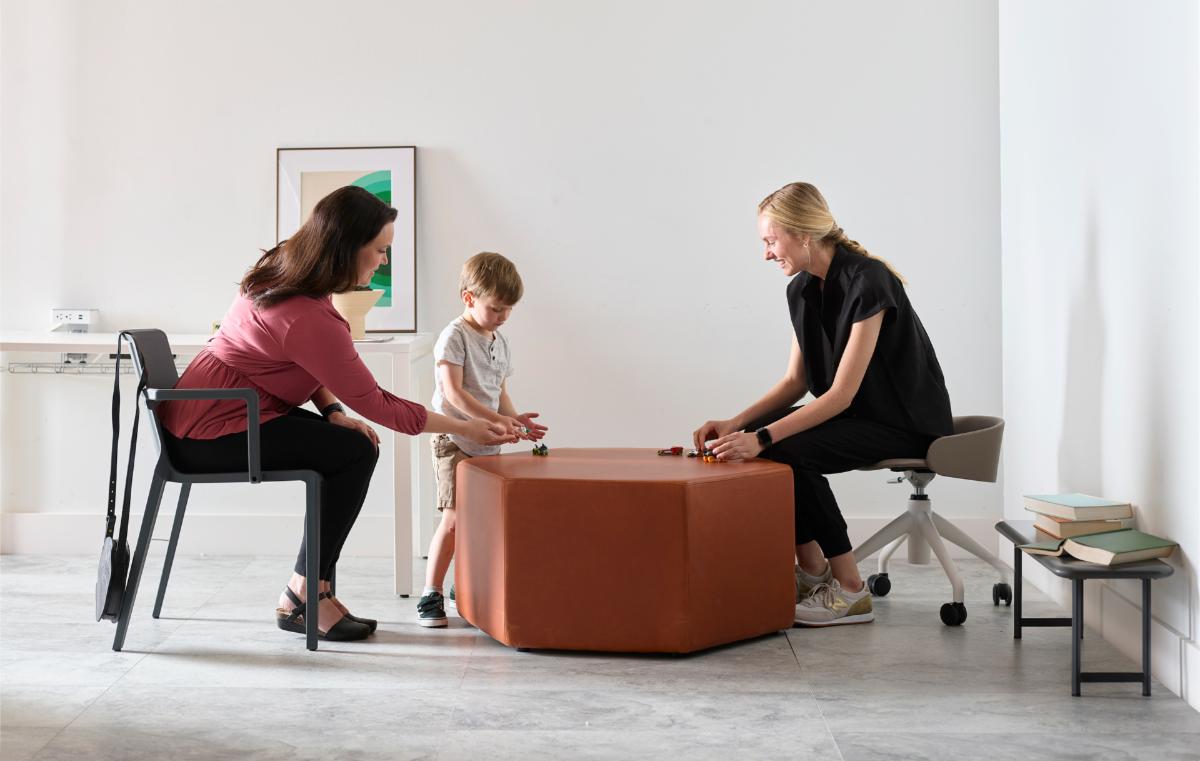
Solution spotlight: OFS Boost+ Pediatrics integrates easily into procedure or recovery rooms with adaptable seating that supports comfort positioning (child + caregiver together). Paired with Hex lounge seating, caregivers and providers have flexible configurations that respect privacy and comfort.
2. Privacy & Dignity
Young patients want to feel respected and safe. Simple missteps—like a door opening mid-procedure—can cause trauma. Spaces designed with visual and auditory privacy in mind help children maintain dignity while still supporting necessary caregiver involvement.
3. Positive Distractions Work
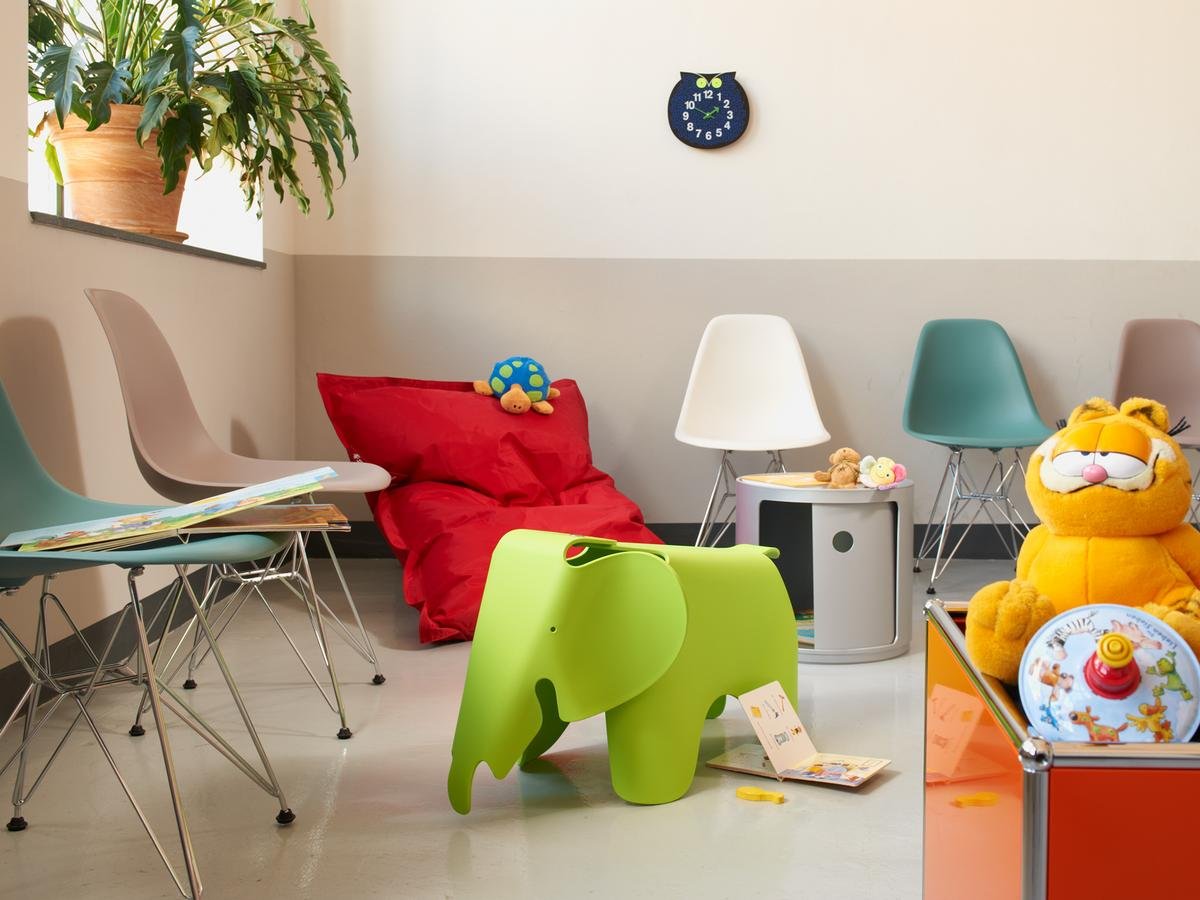
Evidence shows that distractions like ceiling projections, I Spy murals, and tactile or visual play reduce perceived pain and procedure times. These “moments of wonder” matter
Solution spotlight: The Eames Elephant by Herman Miller doubles as playful décor and seating, creating friendly focal points that distract without overwhelming. For waiting rooms, BuzziPuzzle modular acoustic seating offers an interactive, soft-edged solution that kids and families can reconfigure like a game.
4. Sensory Environments Count
Children notice everything—the harsh paper on exam tables, the hum of medical equipment, or the glare of bright lights. Sensory-friendly design (neutral colors, soft textures, natural light) creates a calming environment, especially for neurodiverse patients.
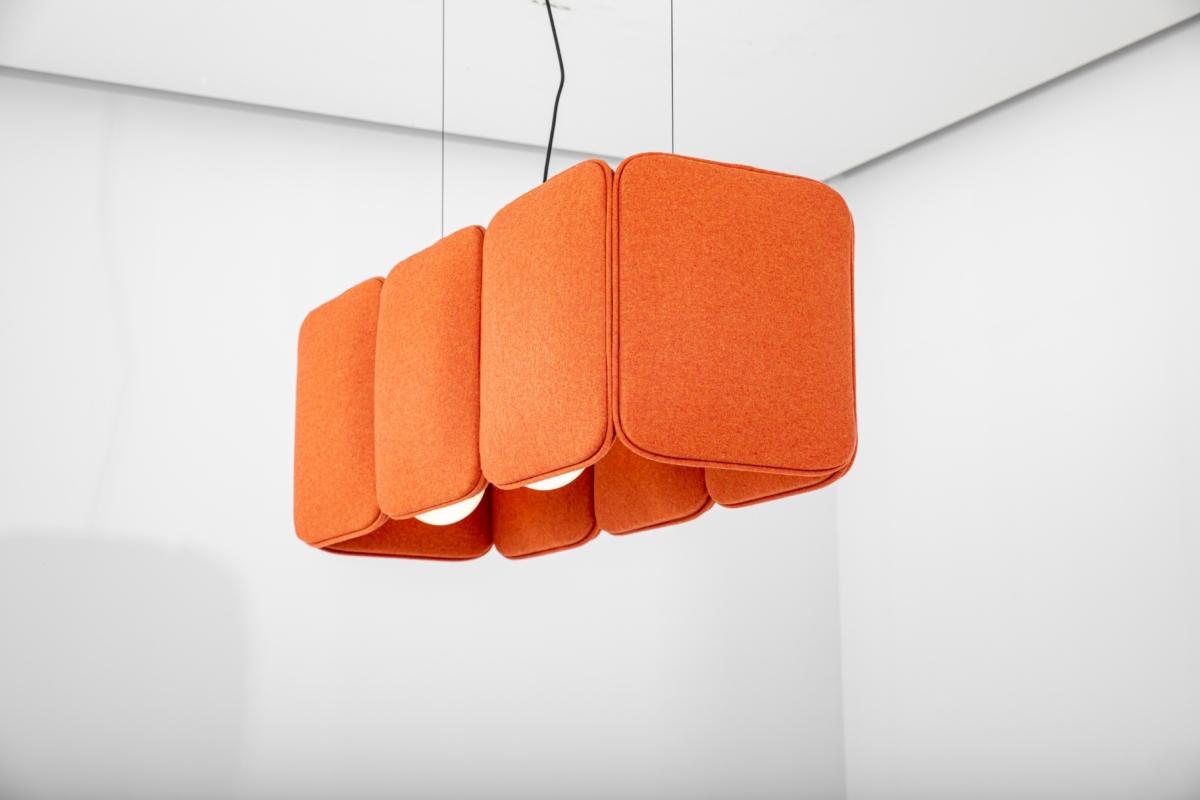
Solution spotlight: BuzziChicle Light adds warmth and acoustic comfort to procedure rooms or waiting areas. Its organic forms reduce noise and soften sterile ceilings while introducing playful yet refined visual interest.
5. The Whole Journey Matters
The patient experience begins long before the procedure. Clear wayfinding, greeters, pre-visit preparation, and even digital tours can help children feel ready. Waiting rooms should provide touch-free play options—like interactive floor projection systems—or safe activity sheets to occupy time without spreading germs.
Balancing Playfulness and Infection Control
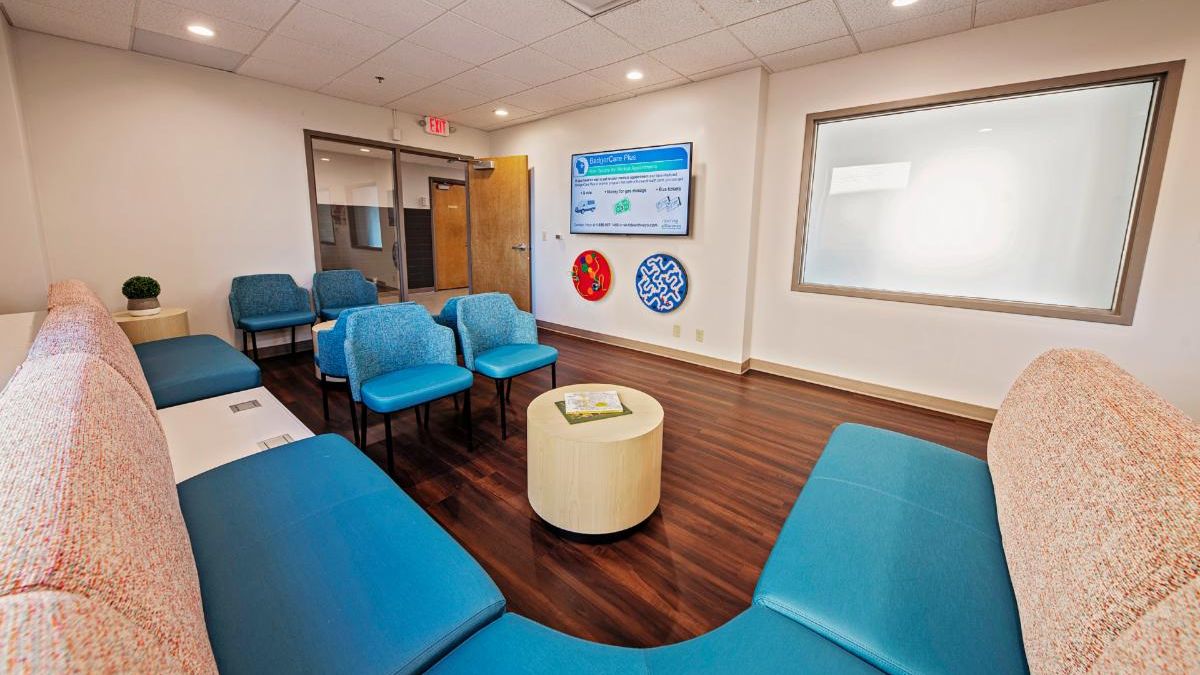
Infection prevention doesn’t have to mean sterile. Touchless technology, modular seating, and easy-to-clean finishes allow spaces to stay inviting and safe.
How Creative Makes a Difference
At Creative Business Interiors, we partner with innovative furniture lines and healthcare organizations to create pediatric environments that are:
- Safe and resilient — built for durability, infection control, and efficiency
- Warm and welcoming — designed to ease fear and reduce pain
- Flexible and inclusive — supporting all children, families, and providers
Creative Business Interiors is a service provider for commercial spaces. Every step of our project process is in-house, from client consulting and designing, through building, furnishing, and maintaining.